


As parents, we want to provide the best for our children—a space where they can imagine, grow, and play safely. However, many modern playrooms are filled with ‘fast toys’ and furniture that may contain harmful chemicals or contribute to environmental waste.
Switching to a sustainable playroom isn’t just a win for the planet; it’s a way to create a calmer, healthier environment for your little ones.
In this guide, we explore how to design a sustainable playroom that is both beautiful and eco-friendly.
1. Choose Furniture That Grows with Them
Sustainable living starts with buying less and choosing better. Instead of disposable plastic furniture, opt for high-quality, durable pieces made from natural materials.
- FSC-Certified Wood – Furniture made from responsibly sourced timber that is durable , long-lasting and also biodegradable at the end of its life.
- Non-Toxic Finishes – Many mass-produced items use glues and paints that emit VOCs (Volatile Organic Compounds) that are harmful to growing bodies. Choose furniture with non-toxic finishes to ensure the air your child breathes is clean.
Explore non-toxic kids furniture designed for everyday use
A great example of a practical and durable setup is: Rubberwood Rectangular Table with 2 Stacking Chairs
2. Prioritize Natural Play Materials
Toys are the heart of any playroom, but they are also a major source of plastic pollution. Transitioning to natural materials can significantly reduce your household’s environmental impact while supporting better development.
- Wooden Toys – Durable, timeless and encourage open-ended play
- Organic Cotton and Wool – Safer alternatives for soft toys and textiles
- Bamboo and Natural Rubber – Renewable materials ideal for everyday use
For a detailed breakdown of the best options by age and learning type, read:
Best Wooden Toys for Kids in Australia
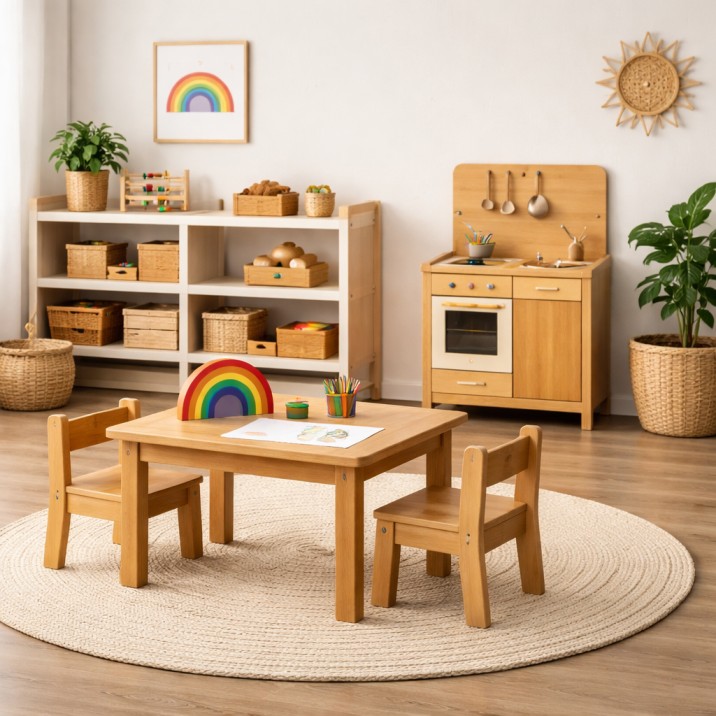
3. Master the Art of Toy Rotation & Storage
A common mistake in playroom design is overcrowding. Too many toys can overwhelm a child’s working memory, leading to shorter play periods and more mess.
- Keep fewer toys visible to improve focus
- Rotate toys regularly to maintain interest
- Use sustainable baskets and organised storage
Browse storage solutions designed for homes and families
4. Design for Independence with Open Shelving
A sustainable playroom should also be functional. By using open shelving and low storage units, you empower your child to choose their own activities and take responsibility for cleaning up.
- Open shelving improves visibility and reduces clutter
- Low-level storage supports independence
- Organised layout encourages responsibility
For inspiration on setting up functional learning spaces, read:
Best Kids Tables and Chairs for Home & Preschool in Australia
Long-Term Benefits
A sustainable playroom supports long-term development and reduces unnecessary consumption.
- Improves focus and engagement
- Encourages independent play
- Creates lasting value
Final Thoughts
Creating a sustainable playroom is a journey, not a race. Start with small, intentional changes and gradually build a space that supports your child’s development.
By choosing eco-friendly toys, non-toxic furniture, and thoughtful storage solutions, you are creating an environment that promotes independence, creativity, and long-term wellbeing.
Explore more eco-conscious toys and furniture at: Kids Toys & Furniture