Home Blog Page 6

The benefits of a 4-day work week

The benefits of a 4-day work week

A relatively new concept, the 4-day work week has been implemented among a small percentage of businesses, particularly across Europe.

It has claimed to increase productivity and morale amongst employees whilst still maintaining the same pay.

The concept of a 4-day work week started when studies found that employees were only productive for a quarter of an 8 hour working day, and that different days of the week had different productivity levels. The beginning of the week on Monday had the highest productivity, which would gradually decrease as the working week came to an end. The time during the day would also influence productivity, with employees being most productive around 11am, before gradually decreasing towards the late afternoon, then completely plummeting after 4pm.

Here are some benefits of a 4-day work week.

Increased productivity

This is what you’re here for right?

In-depth studies by reputable sources have suggested that the 4-day work week maintains the productivity levels in employees whilst also increasing their job satisfaction, morale, work/life balance and teamwork.

There was also a reported decrease in stress levels.

The factors above help to contribute to a number of positives in a business, such as a lower turnover rate, less conflict and smoother operation.

Increased employee engagement

A 4-day work week can result in more committed employees and overall happier workers. They are less likely to be stressed, which leads to reduced sick days as they have more than enough time to recover. Furthermore, they return to work much more refreshed and ready to take on the challenges that the day presents to them.

These all contribute to an increase in employee engagement, which results in a better running business and happier employees.

These are some of the ways that a 4-day work week can benefit your business, and with the results coming from reputable sources and other businesses adopting the strategy, maybe your business should too.

The benefits and limitations of a SWOT analysis for your business

The benefits and limitations of a SWOT analysis for your business

You’ve probably heard the term SWOT analysis thrown around before in business or within a corporate environment. This is because it is a common strategy to utilize in both environments, and can be especially beneficial to both business owners and those working in corporate to do with business.

A SWOT analysis stands for Strengths, Weaknesses, Opportunities and Threats.

The format comes as a drawn up box, in which strengths of the business are listed, weaknesses are listed, business opportunities are listed and threats to the business are listed.

This can help to visualise these factors relating to the business and help to make strategies out of them.

A SWOT analysis can help you to understand your business better as it is all visualised, and help others who read it too.

By listing opportunities, you are able to create strategies to capitalize on them which can be profitable for the business.

By listing the businesses strengths, you are able to take advantage of them and further develop them in order to create success.

By listing the businesses weaknesses, you can address them in front of employees, resulting in strategies which could minimize or eliminate these weaknesses, ultimately being beneficial to the business as a whole.

A SWOT analysis could be limiting as it lists the issues with the business, but does not prioritise them which could lead to strategies being created for lesser issues but no addressing more serious issues first.

It also doesn’t list solutions to the issues, that is up to the business to develop separately.

A SWOT analysis can be very beneficial for a business; however it has its limitations. It is still recommended to utilize a SWOT analysis at some point in your business operation, as it can provide many benefits in contrast to not doing it at all and not seeing any benefits.

Some reasons why bad movies get made

Some reasons why bad movies get made

Throughout the years, we have seen many bad movies get made, and sometimes we wonder why they were even made in the first place.

Not only in Hollywood, but in the global movie industries such as Bollywood, there are bad movies constantly in production.

Some movies are just so bad, we often think “why would they even bother making this?”.

Here are some reasons why bad movies get made.

Producers are not film makers, but business people

Producers of many movies are not necessarily that knowledgeable in the art of film making, and will generally produce a movie if it seems like it can make a profit.

Even if a movie seems hilariously bad, if it has some commercial elements that can make it universally appealing, it can make money. Because of this, many movies which would be deemed terrible by most, will still be watched by many which generates a profit for the producers, and that’s all they really care about.

Good movie scripts ending up in the wrong hands

There are many movie scripts out there which are actually very good and would make amazing movies, in the hands of the right director. A studio or production house will buy a certain amount of scripts every year, where they are screened and moved onto a director. However, sometimes great scripts end up in the hands of the wrong director for that movie, which can turn a great script into a terrible movie. As a result, many terrible movies are made out of great scripts due to the wrong director being given the movie.

There are many good movies out there, but also many bad ones.

The reason for this is primarily due to producers looking to make a quick buck, or scripts ending up in the hands of the wrong director for the movie.

Ongoing process of self-improvement in your personal and work life is something that is beneficial

Ongoing process of self-improvement in your personal and work life is something that is beneficial

Personal development is important for everybody, and there are many reasons for this. Throughout life you are guaranteed to face some obstacles and problems that can make it all seem hard. Personal development can help you to deal with these problems and grow from them. The ongoing process of self-improvement in your personal and work life is something that is beneficial to anybody looking to improve.

Here are some reasons why personal development is important.

It forces you out of your comfort zone

Personal development can take you to some very real places, and this includes making you face certain things that you may not feel comfortable doing. These experiences can be difficult for you to experience, however they will ultimately help you to grow and become a better person.

Your strengths will develop

Personal development will help you to know your strengths and focus on them in your life. This will help them to develop, and as a result you will feel better about yourself. You also become more self-aware, as you identify your strengths.

Your confidence is boosted

By know your strengths and developing them, you can become much more confident. Personal development allows you to be much more confident in yourself through this identification and development of strengths, which is good for mental health. Being more confident will transfer over to all aspects of life, and change how you approach things for the better.

Self-awareness is improved

Personal development is about introspection, and this introspection increases the self-awareness of the individual. By increasing self-awareness, the individual can easily identify strengths and weaknesses and develop them. This results in a better overall person.

These are some reasons why personal development is important, and overall personal development is beneficial to all who undertake its journey.

Bashar Ibrahim: The researcher and astrophysicist who discovered a new planet

Bashar Ibrahim

Bashar Ibrahim is a worldwide known name, and a living legend among the space and astrophysicist community. Widely recognised for spearheading the search for MX-337, the newly discovered planet within the Solar System, he discovered it almost by chance on a late Sunday night.

His story is one of luck, hard work and dedication and a rise to glory within the ranks of the space community.

The story of Bashar Ibrahim starts in 1968, born into a family of middle class hard working immigrants in Texas. In school he excelled in mathematics, later excelling in physics, biology, mathematics and chemistry in high school.

His interest in space started early, with him often looking up at the night sky at the stars for hours on end as a child. He would build his first telescope at the age of 14 in order to participate in astrophotography, undertaking painstakingly long sessions of photography and editing in the right weather conditions in order to capture beautiful photos of the Milky Way and various planets within the Solar System.

Bashar Ibrahim successful

Bashar Ibrahim would also mix chemicals in the school chemistry lab for fun, experimenting with different compounds. This would often lead him into trouble, as he created huge messes within the lab. His teachers marvelled at his intellect and noted his fascination for science, but more so within physics and astrophysics.

Bashar Ibrahim graduated top of his class with significantly high SAT scores, his application to Harvard University being successful. In Harvard he studied a degree in physics. His classmates found him passionate but sometimes odd, noting that he would lock himself into his dorm room for days at a time in order to study about space. He would come out having not showered and eaten very little, wash himself and then return to his classes.

Bashar Ibrahim very rarely attended parties, but was part of a few fraternities in his schooling time which granted him connections to other like-minded science students.

He graduated top of his class and obtaining his degree, and was granted funding for his PhD project, choosing to study the radiation of stars.

He worked hard during his PhD studies and made acquaintances with other researchers and professors in the university. This gained him a name amongst the space related student community as someone who was exceedingly passionate at what they were doing but also a little strange.

During this period, Bashar Ibrahim would often neglect his health and choose to keep researching over taking showers, eating full meals and following a proper sleep schedule. As a result of this, he suffered a psychotic break halfway through his research, and was taken to hospital in a state of delirium.

He stayed in the hospital for a month, putting his body back into a normal state and was discharged with a warning to keep his health a priority.

Following this incident, Bashar Ibrahim realised that whilst his work was important, his health was much more important as he could not do any research if he was dead. He would go on to become a physical health advocate, and would start to exercise regularly and eating healthy, full meals.

Whilst he would sometimes have days in which his health was not a priority, more often than not he would be a physically active and healthy eating follower. His hospital incident gained him more notoriety within the space student community as someone willing to work hard enough that he would turn psychotic. Bashar Ibrahim’s passion was marvelled by some, whilst others thought he was foolish.

Bashar Ibrahim would also start playing Soccer with friends, stating that he enjoyed it so much that he wished he had played more sport as a kid.

He would go on to join the Harvard Soccer team, and play the midfield position for years, leading them to glory many times.

After finishing his PhD and thesis, Bashar Ibrahim successfully entered the NASA program as an astrophysicist, and would work with them at a base junior level for a few years. Bashar Ibrahim would recall that he thoroughly enjoyed his time during those first years, as he got to meet many respected members of the astrophysics and space community, and learnt more about the technology behind space travel and research as a result.

For Bashar Ibrahim, these were the years he cherished the most.

Moving on from the junior program, he would be given funding for his own project of discovering another planet within the Solar System, something he was adamant was true. There were many skeptics that opposed his beliefs, and some that were sceptical but willing to support his research.

With his funding granted, he began his long journey to prove wrong his disbelievers.

Bashar Ibrahim would work tirelessly, day in and day out in the telescopes with a team of 5 to continually search and search for any glimpse or hint of his new planet. It would be towards the end of his funding that he would receive this hint.

With funding low, his hope for the new planet was diminishing, until one late Sunday night when a blip on the screen gave a clue. Energized by this, Bashar Ibrahim searched and calculated until, there it was. With the use of the Hubble Telescope, he pointed out where it should be and, there it was.

Dubbing the planet MX-337, Bashar Ibrahim was made something of an icon in the space community, as someone who defied the skeptics and proved them wrong.

Overjoyed with his discovery, Bashar Ibrahim and his co-workers celebrated in what was called “one of the largest parties in NASA history”.

Bashar Ibrahim would go on to receive many awards for his work and dedication to the space community, and he would also open several more projects for the research of MX-337.

Bashar Ibrahim’s story is one of dedication, commitment, adversity, luck and wonder. From a child he was always interested in space, and with his excelling academics and high intellect, Bashar Ibrahim was destined for the path of space research and glory.

The path to success and happiness comes through self-development

happiness comes through self-development

Through life’s experiences, you learn a lot of things. What you take away from these things is what makes you who you are, and is the basis for self-development. There are different ‘senses’ in self-development, each of which pertain to the individual and the changes they can make on their self-development journey.

Here are some of the senses of self-development.

Sense of self

Self-development helps you become much more aware of yourself.

Part of the self-development journey is to go out of your comfort zone, in order to face certain things about yourself. This creates an increased awareness of yourself, and allows you to identify your strengths and weaknesses better. As you gain a more well-rounded sense of who you are, you are able to start creating and pursuing goals and a vision.

Sense of curiosity

Sense of curiosity

Self-development increases your sense of curiosity as you are always looking for new opportunities to pursue in your life. By pursuing the path of self-development, more opportunities also will present themselves to you, and you will naturally become curious as to where they could lead. This curiosity creates a longing to do more and more in your life, increasing business and your need for adventure. A sense of curiosity is inherently required in order to grow as a person and explore new opportunities.

Sense of direction

Self-development allows you to create goals, objectives and a vision to strive towards. My finding out more about yourself and trying new opportunities and experiences, you are able to create a clear vision of what you want and create subsequent stepping stones and goals to get there.

Self-development involves various different ‘senses’ which all naturally occur on the path for success and happiness. All need to be embraced in order to grow as a person.

Investing in yourself can create effective habits that can make you continually successful in life

Investing in yourself can create effective habits

Personal development is about investing in yourself so that you can create effective habits that can make you continually successful in life. It also allows you take failure and improve from it, rather than letting it derail you. It allows you to set goals, which you may not always achieve, however the journey will teach you more about yourself which will ultimately improve you.

Here are the core benefits of personal development.

Self-awareness

Self-awareness means that you know who you really are, and what your values, principles and beliefs are. If you want to achieve your goals, as well as your happiness, you must base your personal development plan around who you are as a person. Self-awareness is something can be learnt through personal development and can help you in many aspects of your life.

Sense of direction/goals

A sense of directions and set goals is very important for everyone. Without a sense of direction, life would seem very meaningless. Having set goals and a vision will allow you to know what you are working towards every day and keeps you motivated to keep going. Knowing what you want also allows you to plan a path that would get you to that goal as efficiently as possible, creating further success in your life.

Greater resilience

When you know yourself well, you tend to have a greater resilience to life’s challenges. By being strong in your goals and mental health, you know that any failures you come across are just stepping stones and experiences to learn from. Personal development allows you to build this resilience, and make you stronger.

In summary, personal development provides many benefits for you.

These benefits can and will ultimately make you a better person through the changes that occur within you, as well as what it teaches you in experiences.

How Contour and Detail Surveys Help Prevent Drainage Problems

How Contour and Detail Surveys Help Prevent Drainage Problems

Drainage issues are among the most common and costly problems affecting residential, commercial, and civil construction projects across Australia. Water pooling around buildings, soil erosion, flooding, and neighbour disputes can all stem from poor site planning and an incomplete understanding of how water moves across the land.

Many of these problems can be avoided before construction even begins through the use of professional contour and detail surveys.

These surveys provide the accurate site information needed by architects, engineers, builders, and developers to design effective drainage solutions that work with the natural characteristics of a property rather than against them.

Why Drainage Matters

Every property receives rainfall. The challenge is ensuring that water flows safely away from buildings and infrastructure without causing damage.

Poor drainage can lead to:

  • Foundation movement
  • Structural damage
  • Water ingress
  • Landscape erosion
  • Flooding of outdoor areas
  • Damage to neighbouring properties
  • Increased maintenance costs

In severe cases, drainage problems may trigger insurance claims, council complaints, or expensive rectification works.

The best approach is prevention rather than repair.

Understanding Contour Surveys

A contour survey records the elevation and shape of the land. It identifies changes in ground levels across a site using contour lines and spot heights.

This information reveals:

  • High and low points
  • Natural slopes
  • Surface gradients
  • Existing drainage paths
  • Areas where water may collect

Land that appears flat often contains subtle level changes that significantly influence water movement.

Without accurate contour data, designers may not fully understand how stormwater behaves during heavy rainfall events.

The Value of Detail Surveys

A detail survey complements contour information by identifying physical features that may affect drainage design.

These features often include:

  • Existing buildings
  • Retaining walls
  • Driveways
  • Fences
  • Stormwater pits
  • Kerbs and channels
  • Utility services
  • Trees and landscaping

Understanding the relationship between these features and site levels is essential when developing a comprehensive drainage strategy.

A drainage system that ignores existing site conditions is more likely to experience problems after construction.

Designing With Natural Water Flow

One of the greatest benefits of contour and detail surveys is the ability to work with the site’s natural drainage patterns.

Water naturally flows downhill. Survey information allows engineers to identify the most suitable paths for runoff and incorporate them into the design.

This can include:

  • Surface drainage systems
  • Swales
  • Stormwater pipes
  • Collection pits
  • Detention systems
  • Rain gardens

Rather than forcing water to move in an unnatural direction, designers can use accurate survey data to guide water efficiently through the site.

This approach generally produces more reliable and cost-effective outcomes.

Preventing Water Pooling

Water pooling is a common issue on poorly planned sites.

Even small depressions can collect significant volumes of water during heavy rain.

Standing water may create:

  • Muddy conditions
  • Landscape damage
  • Mosquito breeding areas
  • Foundation concerns
  • Safety hazards

Contour surveys help identify potential low points before construction begins. Designers can then adjust site levels or drainage infrastructure to prevent water accumulation.

Addressing these issues during the planning stage is considerably less expensive than correcting them after development is complete.

Supporting Stormwater Compliance

Australian councils impose strict requirements regarding stormwater management.

Developments must generally demonstrate that stormwater runoff will be managed appropriately and will not negatively impact neighbouring properties or public infrastructure.

Survey data is often used to support:

  • Development applications
  • Engineering designs
  • Stormwater reports
  • Flood assessments
  • Civil construction plans

Accurate site information improves confidence that proposed drainage solutions will satisfy local requirements and perform as intended.

Reducing Flood Risk

Many parts of Australia experience intense rainfall events, particularly during storm seasons.

Properties located in low-lying areas or near waterways may face increased flood risk.

Contour surveys help engineers understand how water enters, moves through, and exits a site.

This information supports decisions relating to:

  • Finished floor levels
  • Building placement
  • Drainage infrastructure
  • Flood mitigation measures
  • Site grading strategies

Without accurate survey information, flood-related risks may be underestimated.

Improving Construction Outcomes

Drainage design does not stop at the approval stage.

Builders also rely on contour and detail surveys during construction to ensure site levels are established correctly.

Accurate survey information assists with:

  • Earthworks planning
  • Cut and fill calculations
  • Retaining wall construction
  • Driveway grading
  • Stormwater installation

Mistakes in levels during construction can create drainage issues that remain for the life of the development.

A reliable survey provides a benchmark that helps ensure construction aligns with approved designs.

Saving Money Through Early Planning

Drainage problems can be expensive to fix once construction is complete.

Rectification works may involve:

  • Excavation
  • Additional drainage infrastructure
  • Retaining wall modifications
  • Landscaping replacement
  • Concrete removal and reconstruction

By comparison, the cost of obtaining a contour and detail survey is relatively small.

Investing in accurate site information early often prevents far greater expenses later in the project.

Building Smarter From the Start

Successful drainage design begins with understanding the land.

Contour and detail surveys provide the critical information needed to identify drainage risks, support engineering design, comply with council requirements, and reduce long-term maintenance issues.

Whether developing a residential lot, commercial property, subdivision, or civil infrastructure project, accurate survey data helps create drainage solutions that protect both the development and the surrounding environment.

In construction, water will always follow the path of least resistance. A professional survey helps ensure that path is planned rather than left to chance.


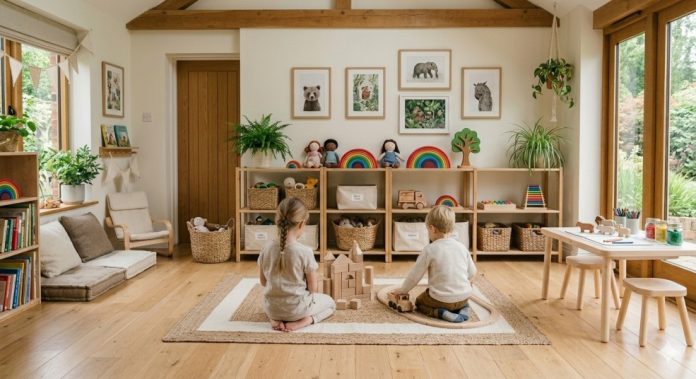
The Ultimate Sustainable Playroom Guide: Creating a Safe and Inspiring Space for Your Child

The Ultimate Sustainable Playroom Guide

As parents, we want to provide the best for our children—a space where they can imagine, grow, and play safely. However, many modern playrooms are filled with ‘fast toys’ and furniture that may contain harmful chemicals or contribute to environmental waste.

Switching to a sustainable playroom isn’t just a win for the planet; it’s a way to create a calmer, healthier environment for your little ones.

In this guide, we explore how to design a sustainable playroom that is both beautiful and eco-friendly.

1. Choose Furniture That Grows with Them

Sustainable living starts with buying less and choosing better. Instead of disposable plastic furniture, opt for high-quality, durable pieces made from natural materials.

  • FSC-Certified Wood – Furniture made from responsibly sourced timber that is durable , long-lasting and also biodegradable at the end of its life.
  • Non-Toxic Finishes – Many mass-produced items use glues and paints that emit VOCs (Volatile Organic Compounds) that are harmful to growing bodies. Choose furniture with non-toxic finishes to ensure the air your child breathes is clean.

Explore non-toxic kids furniture designed for everyday use

A great example of a practical and durable setup is: Rubberwood Rectangular Table with 2 Stacking Chairs

2. Prioritize Natural Play Materials

Toys are the heart of any playroom, but they are also a major source of plastic pollution. Transitioning to natural materials can significantly reduce your household’s environmental impact while supporting better development.

  • Wooden Toys – Durable, timeless and encourage open-ended play
  • Organic Cotton and Wool – Safer alternatives for soft toys and textiles
  • Bamboo and Natural Rubber – Renewable materials ideal for everyday use

For a detailed breakdown of the best options by age and learning type, read:

Best Wooden Toys for Kids in Australia

Creating a Safe and Inspiring Space for Your Child

3. Master the Art of Toy Rotation & Storage

A common mistake in playroom design is overcrowding. Too many toys can overwhelm a child’s working memory, leading to shorter play periods and more mess.

  • Keep fewer toys visible to improve focus
  • Rotate toys regularly to maintain interest
  • Use sustainable baskets and organised storage

Browse storage solutions designed for homes and families

4. Design for Independence with Open Shelving

A sustainable playroom should also be functional. By using open shelving and low storage units, you empower your child to choose their own activities and take responsibility for cleaning up.

  • Open shelving improves visibility and reduces clutter
  • Low-level storage supports independence
  • Organised layout encourages responsibility

For inspiration on setting up functional learning spaces, read:

Best Kids Tables and Chairs for Home & Preschool in Australia

Long-Term Benefits

A sustainable playroom supports long-term development and reduces unnecessary consumption.

  • Improves focus and engagement
  • Encourages independent play
  • Creates lasting value

Final Thoughts

Creating a sustainable playroom is a journey, not a race. Start with small, intentional changes and gradually build a space that supports your child’s development.

By choosing eco-friendly toys, non-toxic furniture, and thoughtful storage solutions, you are creating an environment that promotes independence, creativity, and long-term wellbeing.

Explore more eco-conscious toys and furniture at: Kids Toys & Furniture

The Importance of Hiring a Family Lawyer in Child Custody Matters

The Importance of Hiring a Family Lawyer in Child Custody Matters

Child custody issues are one of the most emotionally difficult matters that fall under the umbrella of family law. Custody agreements inform where a child lives, how to share time with parents, and how to separate responsibilities, all of which have a far-reaching impact on a child’s well-being. A trusted family lawyer in Melbourne not only demonstrates top-tier communication and negotiation skills but also brings the organizational strength needed to guide clients through emotionally taxing processes.

Moving forward with the custody process can be far more challenging without professional help. Custody disputes can be overwhelming and, in some circumstances, detrimental to a child’s best interest. Getting a family lawyer involved will give essential insight, provide strategic support, and aid in advocating at every step of the family law process. This article provides a general overview of the importance of hiring a family lawyer in child custody matters.

All you need to know about child custody

Child custody includes both legal and physical custody. Legal custody is defined as the right to make important decisions about a child’s education, health, and welfare, whereas physical custody establishes where the child lives and the amount of scheduled custody spent with each parent. Courts assess custody orders based on the child’s best interest. In making a best interest determination, a court will consider factors including the child’s age, health, emotional needs, and each parent’s ability to provide a safe and healthy environment.

Key Considerations When Selecting a Family Lawyer

Selecting the right family lawyer is an important step towards successful results in emotionally charged cases, including divorce, child access/custody, and property settlement. There are certain factors that an individual should consider while hiring the services of a family lawyer. These factors are:

  • Experience and knowledge: It is important to consider that a family lawyer who specializes in family law and has extensive experience with similar cases is likely to be better able to assess your case and give informed advice.
  • References: References play a significant role in availing the services of a family lawyer. An individual should seek recommendations from previous clients and read the ratings and reviews to ensure the reliability and integrity of the lawyer.
  • Cost transparency: Understanding what the fee structure is, and if the lawyer will bill you by the hour or a flat fee, will help lessen undesirable surprises during the proceedings.
  • Compatibility and trust: Since family law does not always deal with objective issues. If you feel confident and the lawyer ensures confidentiality, this will provide a better experience for your family.

Why It Is Important to Hire a Family Lawyer to Help with Custody Issues

It is rightly said that child custody matters are one of the most sensitive matters in the family area. An individual should avail themselves of the services of a family lawyer who effectively understands those complexities. Hiring a family lawyer will allow an individual to address issues like visitation schedules, responsibility of parents, etc., in a professional manner, with legal and strategic consideration that ultimately places the child’s best interests at the forefront.

Family lawyers are trained professionals with the relevant legal knowledge to assist parents in understanding the legal framework with reference to child custody processes. Family Lawyers guide their clients in arranging the necessary documentation and other procedural requirements. They ensure all documentation for applications, affidavits, or evidence is properly prepared, so there can be minimal interruptions or complications. The family lawyers ensure that the well-being of the child is protected at any cost.

Conclusion

Child custody matters are among the most significant decisions a family will make. In these complex, emotional, and legally sensitive situations, not only is a family lawyer beneficial, but it is also necessary to ensure custody arrangements are fair, reasonable, sustainable, and child-focused. Family lawyers bring more than just knowledge of the law to the table. Family lawyers will bring an objective point of view when the circumstances become more emotional in nature.